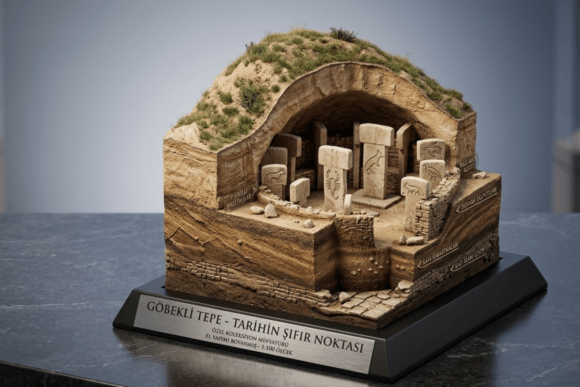
Exploring Göbekli Tepe: A Prehistoric Marvel
Nestled near Şanlıurfa, Turkey, Göbekli Tepe is a monumental temple complex that has captivated archaeologists and history enthusiasts alike. Unearthed in 1995 by German archaeologist Klaus Schmidt, this site challenges our understanding of prehistoric human societies and their capabilities.
The Age and Significance of Göbekli Tepe
Built around 10,000 BC, Göbekli Tepe predates Stonehenge by 7,000 years and the Egyptian Pyramids by 7,500 years. This makes it the oldest known monumental structure created by humans. Its discovery has reshaped our views on the development of civilization, suggesting that religious and social structures existed before the advent of agriculture and permanent settlements.
Ancient Architectural Wonders
Göbekli Tepe's most striking features are its T-shaped limestone columns, which stand up to 6 meters high and weigh as much as 40 tons. These columns, believed to represent stylized human figures, are adorned with intricate carvings of animals such as lions, bulls, foxes, scorpions, and snakes. The level of detail and symbolism in these reliefs highlights the advanced artistic and symbolic thinking of the people who built them.
Circular Structures and Their Purpose
Over 20 circular structures have been identified at Göbekli Tepe, ranging from 10 to 30 meters in diameter. These structures, likely enclosures, were likely arenas for communal gatherings and rituals. The arrangement and scale of these circles suggest a sophisticated understanding of space and possibly celestial events, adding to the site's enigmatic allure.
Why Göbekli Tepe Matters Today
The significance of Göbekli Tepe extends beyond academic interest. It offers a tangible link to our distant past, providing insights into the origins of human culture and belief systems. For educators, it serves as a powerful teaching tool, illustrating the complexity of early human societies and challenging traditional narratives about the Neolithic Revolution.
Practical Uses and Educational Value
For professionals and hobbyists, Göbekli Tepe Diorama can be a fascinating subject for projects, presentations, and creative endeavors. It can inspire artists, writers, and designers, offering a rich tapestry of symbols and architectural elements to draw upon. In educational settings, it can be used to spark discussions on prehistory, archaeology, and the evolution of human societies.
Considerations for Visitors and Enthusiasts
If you're planning to visit or study Göbekli Tepe, it's important to consider the site's ongoing excavation and preservation efforts. Respect for the site and its artifacts is crucial. Additionally, engaging with local guides and resources can provide deeper insights and a more enriching experience.
Whether you're a history buff, an educator, or simply curious about the ancient world, Göbekli Tepe Diorama offers a unique and profound connection to our shared human heritage. Its enduring mysteries and architectural marvels continue to inspire and challenge us, making it a must-see for anyone interested in the roots of human civilization.